Reading about race and multiculturalism in art this week has made me consider once again how “others” are represented in the art world. For the most part, they aren’t. and the ideas of multiculturalism seem to have solidified boundaries between some of the minority groups. There are latin-american artists, African-americans, asian-americans, in this case I think that a gendered approach actually mixes up some of those boundaries a little. Because Asians do not show with latinos who do not show with blacks. With this separation comes the reinforcing of stereotypes, latino art is religious, asian art is orientalist, and black art cannot be anything but about race.
The show, “freestyle,” also known as the post-black show, attempted to break through some of the stereotypes associated with “black” art. These were artists who happened to be black who were very engaged with ideas about what it meant to be black. I think it is great that shows of this type break down common stereotypes and styles associated with certain groups of people…..but I think that I have a problem with only people from within the group being about to question/criticize the group. After seeing the post-jewish show and now reading about post-black I do see these movements as going forward but I still see them holding on to socially constructed categories. I think this complaint is aimed at the curators and other organizers of the art world, and not the artists themselves though. It seems, from the descriptions of both shows, that although the artists could not help but come from a certain perspective (because of their faith/skin color/heritage) they did not necessarily feel that they were making some kind of ethnically specific art. And another problem I have with even post-black/asain/latino(etc) is where people of mixed ethnicities fit in. the art world does not seem to have addressed hollingers idea of post-ethnicity. Is it because each of the 5 skin-colored pentagon are worried about losing part of their team? White skin doesn’t fit into this idea because white has always dominated, so inevitably we will have to stop seeing repetitive, often mediocre, white man art. But, and this applies outside of the art world, are blacks/Asians/latinos worried about losing some of their numbers to a mixed category? It is sad that the skin-color pentagon that has had such a mixed history, bringing both good (affirmative action) and (mainly) bad (racism), would need to be held on to, to the detriment of another minority group- mixed ethnicities.
Showing posts with label Hollinger. Show all posts
Showing posts with label Hollinger. Show all posts
Sunday, March 16, 2008

Sunday, March 9, 2008
i went to a lecture this week
I went to a lecture this week. The lecture was from author David Hollinger who wrote, among other things, the book we are reading titled “postethnic America.” His lecture was mainly broken own into 2 parts, with a small 3rd part. First he mainly talked about ethno-racial relations, with obama as an example. Many people have questioned whether obama is “black enough,” I never fully understood why that was even a question. Except possibly on the level that some people would say he doesn’t “act black” or “sound black” which I have always found incredibly offensive. According to Hollinger, there is a different part of the story I wasn’t aware of. In the united states, immigrants or children of immigrants from Africa or the carribean statistically do better economically, educationally, and intermarry more often than African-americans who have been here since the slave trade. So, because obama is the son of an immigrant, he is automatically set in a different category. I was curious about how many generations a family has to be here before this difference is no longer noticeable. If a family came to this country in the early 1900s, they would not have had to deal with being a part of the slave trade, but they would still have been heavily discriminated against and would have been part of the civil rights movement possibly…. During the lecture, someone asked if language was part of the problem. Hollinger did talk a little bit about language, he had a quote from colin powell about how having only a little African American in him made him black no matter what, but he didn’t sound black so that also set him apart. I think that was the gist of his quote, maybe I changed it a little bit to what I was thinking about, but either way, I thought colin powell was another great example of the situation that obama is in right now. the 2nd and 3rd parts werent as interesting to me, the 2nd part was about the jewish relationship to identity. the short 3rd part was about how hollinger was post-idaho when he finally met a jewish person when he was growing up.
All of this goes back to what our identities are made up of. We saw the “new authentics” show on Tuesday, what a great show, everyone should go see it. I believe its up until mid april. All of the artists in the show were jewish in some way although not all would have considered each other to be jewish. I know I already spoke a little about the show so I won’t go over it all again.
I don’t know if it is just because I am tired (again) or if I am just in an abnormally wistful mood, but I wish we could somehow comprehend a person’s identity always as an accumulation of their personal history- as well as understand that their identity can change at any minute in answer to that personal history or in response to a contemporary situation. But I think that would require us all to be mind readers. And if we were all mind readers I guess we probably wouldnt have the life experiences we end up having.

All of this goes back to what our identities are made up of. We saw the “new authentics” show on Tuesday, what a great show, everyone should go see it. I believe its up until mid april. All of the artists in the show were jewish in some way although not all would have considered each other to be jewish. I know I already spoke a little about the show so I won’t go over it all again.
I don’t know if it is just because I am tired (again) or if I am just in an abnormally wistful mood, but I wish we could somehow comprehend a person’s identity always as an accumulation of their personal history- as well as understand that their identity can change at any minute in answer to that personal history or in response to a contemporary situation. But I think that would require us all to be mind readers. And if we were all mind readers I guess we probably wouldnt have the life experiences we end up having.
Saturday, March 1, 2008
the new authentics
This week I had readings from the catalogue of the show “The New Authentics,” by Staci Boris. Boris discusses how in this particular place in time much of our society is questioning what it means to have a certain identity, specifically in this case- the jewish identity. Boris feels that jews are able to choose what it looks like to be jewish, as opposed to in the past when jewishness was a very concrete category. Boris compares this exhibition to the exhibition titled “Freestyle,” where the term post-black was used in reference to the artists of that show. The artists in “Freestyle,” did not make what could have been called “black” art, although curator Thelma Golden felt that it was possible that race could have been an influence for the artists work. Similarly, Boris put this exhibition together to see how different degrees of jewish affiliation could be visually portrayed. The artists of “New Authentics” have a variety of backgrounds, not many identify themselves as mainly jewish and one is not American.
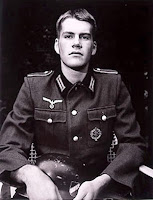
The work in the show seems to cover many different subjects, Collier Schorr’s work- “shatter[s] taboos on both sides, Schorr, as both insider and outsider, makes ‘work that Germans would make about Germany if they were American.’”
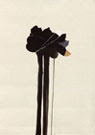
Shoshana Dentz uses imagery made near her home in Brooklyn as well as other pop culture sources to talk about the Israel/Palestine conflict, ideas of home, and the psychology of borders.

In the work of Shoshanna Weinberger, identity is the largest influence. Weinberger considers herself a “Jamaican Jew,” who actually uses a mixed media approach to represent the hybridity of her own affiliations.
Because I have also been reading Hollinger’s “Postethnic America,” I questioned the premise of this show. The closest way I can explain things is that it would be the same to me if there was a show put on about being catholic. I am glad that in the essay Boris speaks about post-jewishness as a way to really consider what it means to be jewish, both in comparison to postmodernism’s hybridity as well as Hollinger’s postethnic voluntary affliation to groups. I am trying to analyze my feelings about this and I think that my lack of understanding for this show comes from the fact that I am REALLY not a religious person. I have never understood institutionalized religions and I think religion is a very individual and personal idea. So I can’t comprehend having a religion (as a category or something) be part of my identity. But I am trying to not be hypocritical, I am sure other people take being jewish (or catholic or whatever) very seriously (and obviously that is what this show is about).
The work in the show seems to cover many different subjects, Collier Schorr’s work- “shatter[s] taboos on both sides, Schorr, as both insider and outsider, makes ‘work that Germans would make about Germany if they were American.’”

Shoshana Dentz uses imagery made near her home in Brooklyn as well as other pop culture sources to talk about the Israel/Palestine conflict, ideas of home, and the psychology of borders.

In the work of Shoshanna Weinberger, identity is the largest influence. Weinberger considers herself a “Jamaican Jew,” who actually uses a mixed media approach to represent the hybridity of her own affiliations.

Because I have also been reading Hollinger’s “Postethnic America,” I questioned the premise of this show. The closest way I can explain things is that it would be the same to me if there was a show put on about being catholic. I am glad that in the essay Boris speaks about post-jewishness as a way to really consider what it means to be jewish, both in comparison to postmodernism’s hybridity as well as Hollinger’s postethnic voluntary affliation to groups. I am trying to analyze my feelings about this and I think that my lack of understanding for this show comes from the fact that I am REALLY not a religious person. I have never understood institutionalized religions and I think religion is a very individual and personal idea. So I can’t comprehend having a religion (as a category or something) be part of my identity. But I am trying to not be hypocritical, I am sure other people take being jewish (or catholic or whatever) very seriously (and obviously that is what this show is about).
Sunday, February 3, 2008
identity affiliations and gender performance
The readings for this week were about identity and how it is formed. Specifically in art history, identity is a way to understand the motivation behind the work. As in, if art was made by a woman, then she probably made it a certain way because she was a woman and had certain life experiences. In the history of art history, this reliance on the identity of the artist has created many parallel art histories. Women’s art history, African American art history, and others are looked at as separate happenings instead of being interconnected. Even as more emphasis was being put on certain categories of people, women, African American, homosexual, there were some that were resisting the labels of identity. They wanted to be more than just a homosexual artist, they wanted to be artists who happened to be homosexual, African American, and/or women.
In the article “Performative acts and Gender Constitution,” Judith butler attempts to define what gender is and isn’t. Gender is a series of repeated acts that both the actor and the audience believe. This belief that the series of acts equals a certain gender has been repeated throughout history and because of this repetition many people believe that gender is natural. That there are certain ways each gender should act according to their sex. The interesting thing about this is that when a person does not “perform” their gender according to social norms they are punished, which implies that deep down society knows that gender is NOT a natural concrete set of rules, because if it were than all behavior would be natural. I’m not sure how much of that makes sense, but it was pivotal to me (see image). I began to draw parallels between how art has been thought of and how that thought process has changed. Initially art was thought to have this innate meaning that was universally understood by all, no matter what context it was put in or who the viewer was. There are definitely still people who believe this, but many contemporary practitioners and historians have come to understand and accept that the meaning of a piece of art lies somewhere between the viewer, the art, and the context in which it’s seen. And from this weeks reading, that is very similar to how I understand gender, that we perform in certain ways, depending on where we are and who our audience is; our audience understands our gender because we are acting in accordance with societal context and we are dressed in a certain way.
Another facet to identity is ethnicity. David Hollinger argues for the idea of “post-ethnicity.” The reason that Hollinger feels there is a need for a new way to look at ethnic identity is because past methods have failed. Multiculturalism does not go far enough to include the diverse array of people and although it worked well when it was growing in the 1980s and 1990s, it has failed to be updated since then. Post-ethnicity takes the cosmopolitanism that was prevalent in multiculturalism and pairs it with the idea that identity is voluntary. We choose to be affiliated with certain groups, as opposed to have a concrete identity that just IS. Hollinger feels there are three main groups that are affecting Americans thoughts about ethnicity. The business elite who don’t care much about actual Americans because they do most of their business overseas, a group that sees themselves as trans-national and therefore do not care much about a national community, and the third group is the “middle Americans,” the Evangelical Christians who feel strongly about America but believe that it belongs only to the people that look like them (white, middle class, and straight). After reading this section I am left wondering how I fit into America. I don’t affiliate myself with any of the 3 constituencies that Hollinger outlines, I do feel that I would identify with the idea of post-ethnic. I have always hated the idea that a label was going to be chosen for me by an outside force, and this label might fit some aspects of my personality and the rest must be flukes because they don’t fit a certain way.
In the article “Performative acts and Gender Constitution,” Judith butler attempts to define what gender is and isn’t. Gender is a series of repeated acts that both the actor and the audience believe. This belief that the series of acts equals a certain gender has been repeated throughout history and because of this repetition many people believe that gender is natural. That there are certain ways each gender should act according to their sex. The interesting thing about this is that when a person does not “perform” their gender according to social norms they are punished, which implies that deep down society knows that gender is NOT a natural concrete set of rules, because if it were than all behavior would be natural. I’m not sure how much of that makes sense, but it was pivotal to me (see image). I began to draw parallels between how art has been thought of and how that thought process has changed. Initially art was thought to have this innate meaning that was universally understood by all, no matter what context it was put in or who the viewer was. There are definitely still people who believe this, but many contemporary practitioners and historians have come to understand and accept that the meaning of a piece of art lies somewhere between the viewer, the art, and the context in which it’s seen. And from this weeks reading, that is very similar to how I understand gender, that we perform in certain ways, depending on where we are and who our audience is; our audience understands our gender because we are acting in accordance with societal context and we are dressed in a certain way.
Another facet to identity is ethnicity. David Hollinger argues for the idea of “post-ethnicity.” The reason that Hollinger feels there is a need for a new way to look at ethnic identity is because past methods have failed. Multiculturalism does not go far enough to include the diverse array of people and although it worked well when it was growing in the 1980s and 1990s, it has failed to be updated since then. Post-ethnicity takes the cosmopolitanism that was prevalent in multiculturalism and pairs it with the idea that identity is voluntary. We choose to be affiliated with certain groups, as opposed to have a concrete identity that just IS. Hollinger feels there are three main groups that are affecting Americans thoughts about ethnicity. The business elite who don’t care much about actual Americans because they do most of their business overseas, a group that sees themselves as trans-national and therefore do not care much about a national community, and the third group is the “middle Americans,” the Evangelical Christians who feel strongly about America but believe that it belongs only to the people that look like them (white, middle class, and straight). After reading this section I am left wondering how I fit into America. I don’t affiliate myself with any of the 3 constituencies that Hollinger outlines, I do feel that I would identify with the idea of post-ethnic. I have always hated the idea that a label was going to be chosen for me by an outside force, and this label might fit some aspects of my personality and the rest must be flukes because they don’t fit a certain way.
moar funny pictures

Subscribe to:
Posts (Atom)